Loading... Please wait...
Categories
Our Newsletter
- Home
- Net Making Supplies
Net Making Supplies
Building and repairing your own fishing nets requires quality materials you can trust. At Delta Net & Twine, we manufacture most of our net-making supplies in-house at our Greenville, Mississippi, facility, giving us complete control over material quality and consistency for commercial fishermen, aquaculture professionals, and fish farmers.
Ropes & Lines
The right rope makes all the difference when constructing durable fishing nets. We offer ropes and lines tested for commercial fishing applications, with diameters ranging from 1/4-inch to 3/4-inch and breaking strengths from 400 to 3,000 pounds, depending on material and construction.
Nylon
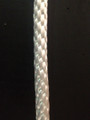
Nylon rope handles UV exposure and water contact better than most synthetic alternatives. We carry both solid braid and twisted nylon variants in our facility. Solid braid offers a smooth surface that won't snag and maintains consistent strength even when wet, while twisted nylon provides up to 15% stretch under load for excellent shock absorption when hauling nets.
Polypropylene
Our polypropylene hollow-braid rope weighs about 40% less than equivalent nylon, making it easier to handle during net construction and deployment. This material won't absorb water and floats naturally—a practical advantage when you need buoyancy without adding foam floats to every section of rope.
Twines & Threads
Quality twine forms the backbone of any fishing net. We stock nylon and polyethylene twines in sizes from #9 (fine mesh) to #96 (heavy-duty), with breaking strengths clearly marked for each size.
Twisted
Twisted twine comes in sizes ranging from #9 to #96, with footage-per-pound varying from 1,500 feet (light twine) to 150 feet (heavy twine). Our tarred twine undergoes a coal-tar treatment that extends its service life by 2-3 years in wet conditions compared to untreated material. White nylon twine works well for nets that dry between uses and costs about 20% less than tarred options.
Braided
Braided twine costs slightly more than twisted but lasts longer when nets drag across sand, gravel, or boat decks. The tight braid pattern distributes stress more evenly across fibers, reducing the chance of individual strands breaking under load. We've found braided twine particularly useful for nets that are regularly pulled across rough surfaces.
Weights & Floats
Proper weight and float distribution keep your nets performing as intended. We stock lead-core weights from 1/4-ounce to 1-ounce per foot, and foam floats with buoyancy ratings of 2 to 8 ounces each. The weight-to-float ratio determines your net's angle in the water—more weight creates a steeper profile, while more floats create a wider spread.
Net Making Tools
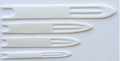
We've been making nets at our facility for years, and the right tools genuinely speed up the work. Our net needles come in lengths from 2 to 12 inches, matched to different mesh sizes—smaller needles for tight mesh, larger ones for wide spacing. Mesh gauges keep your spacing consistent, which matters when you need specific fish retention sizes or want your net to perform predictably.
Why Choose Delta Net and Twine for Your Net Making Supplies
We manufacture most of our net-making supplies at our Greenville, Mississippi, facility, where we've been producing commercial fishing equipment since our founding. This means we can maintain strict quality control over materials and help you troubleshoot when a particular combination of rope, twine, and hardware isn't performing as expected. Our team includes people who've built thousands of nets and can recommend specific material combinations based on your fishing method, target species, and water conditions.
Browse our complete selection of net-making supplies below. Call us at the number listed if you need help matching materials to your specific application—we're happy to discuss your project details.
Net Making Supplies FAQs
What Rope Diameter Works for Gill-Net Top Lines?
Most gill-net top lines use 3/8- to 1/2-inch-diameter rope. We typically recommend 3/8-inch for nets up to 100 feet long and 6 feet deep, and 1/2-inch for anything larger. The rope needs to support the cumulative weight of floats (usually 20-30 pounds for a 100-foot net) while remaining flexible enough to coil without kinking. Nets used in rivers or areas with strong currents benefit from a diameter of 1/2 inch or larger, as water pressure adds a significant load.
When Should I Choose Tarred Over White Nylon Twine?
Choose tarred nylon twine for nets that stay wet most of the time—hoop nets, gill nets, or any net left in the water for days or weeks. The tar coating slows rot and algae buildup, typically adding 2-3 seasons of service life compared to white twine. White nylon twine works well for seine nets and dip nets that get pulled out and dried after each use. White twine also makes it easier to spot damage during inspections, which matters for nets you're checking frequently.
How Many Floats Per Foot Does a Standard Seine Need?
A typical seine net uses one float every 12 to 18 inches along the top line. We generally recommend starting with 12-inch spacing for nets 4-6 feet deep, and 15-18 inch spacing for shallower nets under 4 feet. The calculation depends on your float size (we stock 2-ounce to 8-ounce floats), mesh weight, and how high you need the headline to ride. Heavier #96 twine mesh needs more frequent floats than lighter #36 mesh to maintain the same top-line height.
Call Us Now!

FOR INFO OR ADVICE
CALL (662) 332-0841
Current Top Sellers
-
1
-
2

-
3

-
4
-
5